Robins
(Erithacus rubecula)
Appearance
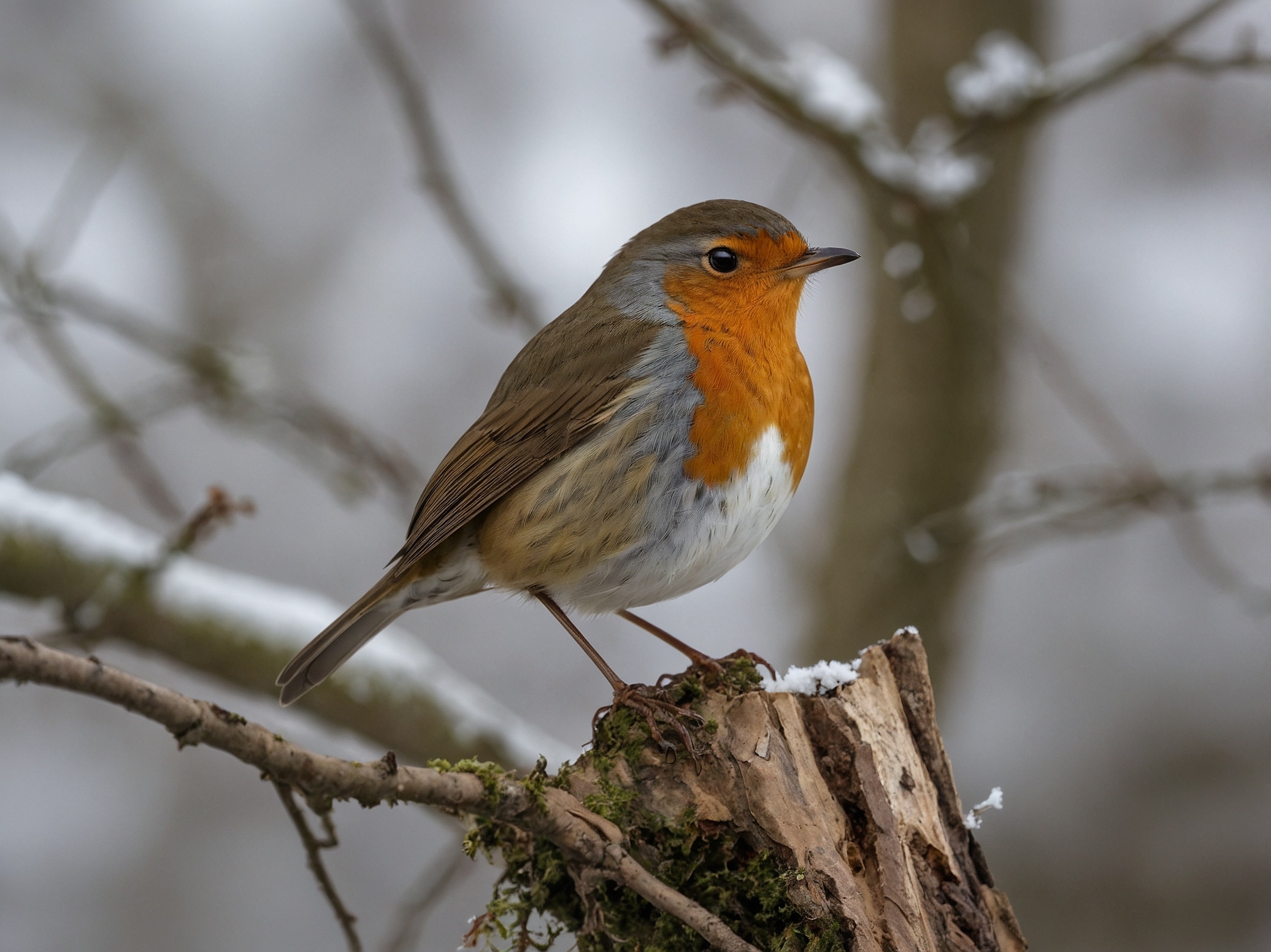
Robins are small, plump birds, typically measuring about 14 cm in length and weighing between 14 and 21 grams. They are easily recognisable by their bright orange-red breast and face, brown back, and white belly. Males and females look alike, but juveniles are speckled with golden brown and lack the distinctive red breast until they mature. Their legs are relatively long and slender, and their beak is short and pointed, ideal for foraging insects and other small invertebrates.
Habitat
Robins are versatile birds found in a variety of habitats, including woodlands, gardens, parks, and hedgerows. They prefer areas with dense undergrowth or shrubs for nesting and roosting. During the breeding season, they are particularly territorial and can often be seen defending their patch of ground against intruders. Robins are commonly seen in gardens and parks, making use of the abundant food sources and nesting opportunities.
Robins typically build their nests in hidden locations, such as in log piles, hollows in tree trunks, dense hedges, and occasionally in man-made structures like sheds and garages. They use materials like grass, dead leaves, and moss, often lining their nests with hair for added insulation.
Behaviour
Robins are known for their melodious song, which they use to defend their territory and attract mates. They are one of the few British birds that sing throughout the winter, and their song can often be heard even at night near street lights. Robins are highly territorial, especially during the breeding season, and will aggressively defend their territory from other robins.
Their diet primarily consists of insects, worms, and other invertebrates, which they forage for by probing the ground with their beaks. During the winter months, they also eat fruits and berries. Robins are known to follow gardeners, hoping to catch worms and other insects unearthed by digging.
Breeding typically starts in late March and can continue until June. Females lay 4 to 6 eggs, which are incubated for about two weeks. The chicks fledge approximately two weeks after hatching, and the parents continue to feed them for a short period after they leave the nest.
Why are Robins considered beneficial?
Unlike some bird species that can become pests, robins are generally considered beneficial due to their role in the ecosystem:
- Insect Control: Robins help control insect populations by feeding on various pests, including beetles, caterpillars, and grasshoppers. This behaviour helps maintain a balance in the ecosystem and can reduce the need for chemical pest control methods.
- Seed Dispersal: By consuming fruits and berries, robins aid in seed dispersal. The seeds pass through their digestive system and are deposited in different locations through their droppings, promoting plant diversity and contributing to the health of ecosystems.
- Soil Aeration: When robins forage for food, their probing action helps aerate the soil, promoting healthy root growth and improving soil quality.
Legal Considerations
Robins are protected under the Wildlife and Countryside Act 1981 in the UK, which makes it illegal to intentionally kill, injure, or take any wild bird, or to damage or destroy their nests while they are in use or being built. These protections help ensure that robin populations remain stable and continue to contribute to the ecosystem. Conservation efforts are important to mitigate the impacts of habitat loss and other threats to their survival.
Robins in the UK
In the UK, robins are a beloved part of the urban wildlife. The country’s parks, gardens, and green spaces provide ideal habitats for these birds. They are commonly seen and heard in residential gardens, adding to the charm of urban life. Residents can support robin populations by providing bird feeders, planting native shrubs, and ensuring there are plenty of nesting opportunities in their gardens.
Public awareness and community involvement are key to conserving robin populations. Gardeners can help by avoiding the use of pesticides that kill the insects robins feed on and by providing fresh water sources. Creating bird-friendly gardens with a variety of plants that produce berries and seeds can also support these birds throughout the year.
Robins
Pest activity
Jan
Feb
Mar
Apr
May
Jun
Jul
Aug
Sep
Oct
Nov
Dec
Risks
Infestation
Public Health
Property Damage
Escalation (left untreated)
Book a FREE Survey
Call us on 0800 808 5615