Feral Pigeons
(Columba livia)
Appearance
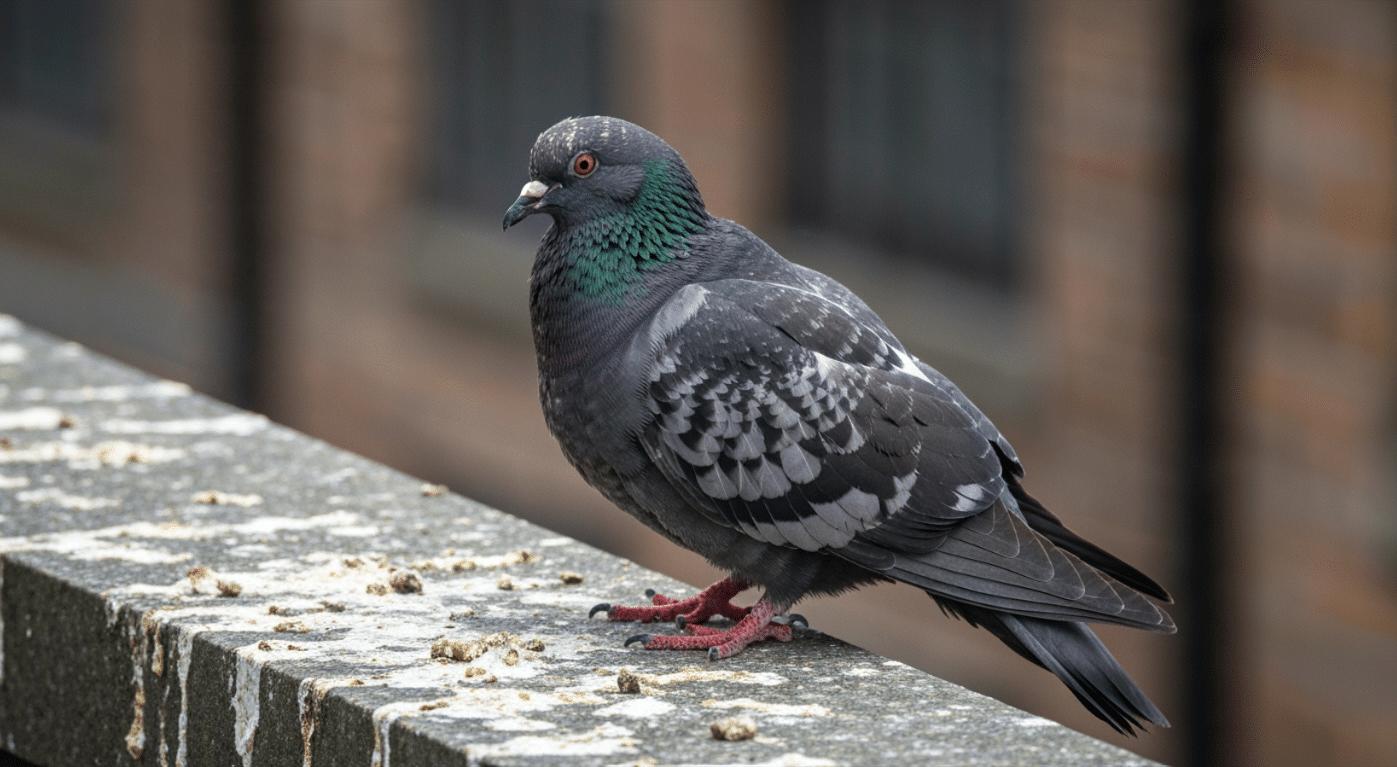
Feral pigeons, often referred to as city pigeons, are descendants of domesticated rock doves. These birds are medium-sized, typically measuring between 30 to 35 centimetres in length and weighing around 300 grams. They have a distinctive plump body, short neck, and small head. Their wings are broad and pointed, and they have a relatively long tail that is often fanned out during flight.
The plumage of feral pigeons is highly variable, reflecting their mixed ancestry. Common colours include shades of grey, blue, brown, and white, often in various combinations. The most recognisable variety is the blue-grey pigeon with two black bars on each wing and a greenish-purple iridescence around the neck and breast. Their eyes are usually orange or red, and their beak is pale with a noticeable cere (a fleshy area at the base of the beak).

Habitat
Feral pigeons are incredibly adaptable and can thrive in a wide range of environments. They are most commonly found in urban areas, where they exploit the abundance of food and nesting sites provided by human activity. Typical habitats include city centres, parks, bridges, and building ledges. Pigeons are also frequently seen around farms, granaries, and other rural locations where food is readily available.
In cities across the UK, feral pigeons often nest in building ledges, rooftops, attics, and other sheltered areas that mimic the cliff faces and caves used by their wild ancestors. These urban environments provide ample food sources, including discarded human food, bird feeders, and agricultural grain.
Behaviour
Feral pigeons are highly social birds that often form large flocks. These flocks can number from a few dozen to several hundred birds, depending on the availability of resources. Pigeons are known for their strong homing ability, which allows them to return to their nesting site from long distances. This behaviour is a vestige of their domesticated past when they were used as homing and racing pigeons.

Their diet is omnivorous but mainly consists of seeds, grains, and human food scraps. In urban areas, pigeons can often be seen foraging in parks, streets, and around outdoor eating areas. They are opportunistic feeders and have learned to exploit the food provided by humans, whether intentionally or accidentally.
Pigeons breed throughout the year, but peak breeding seasons are in the spring and summer. A typical pigeon nest is a simple platform made of twigs and other debris, usually located in a sheltered area. The female lays two white eggs, which both parents incubate for about 18 days. Once hatched, the chicks are fed “pigeon milk,” a nutritious secretion produced by both parents. The young pigeons fledge (leave the nest) at around 4-6 weeks old.
Why are Feral Pigeons considered a pest?
Feral pigeons are considered pests for several reasons, primarily related to their high numbers and the problems they can cause in urban environments. Here are the main issues associated with feral pigeons:
- Health Risks: Pigeons can carry a variety of diseases that can be transmitted to humans, including histoplasmosis, cryptococcosis, and psittacosis. Their droppings can also harbour harmful pathogens, contributing to unsanitary conditions, particularly in areas where food is prepared or consumed.
- Structural Damage: Pigeon droppings are highly acidic and can cause significant damage to buildings and monuments. Over time, the acid in the droppings can erode stone, metal, and other building materials, leading to costly repairs and maintenance.
- Safety Hazards: Accumulations of pigeon droppings can create slippery surfaces on pavements, stairs, and ledges, posing a risk of slips and falls. Additionally, nesting materials and droppings can block gutters and drains, leading to water damage and other structural issues.
- Noise and Nuisance: Large flocks of pigeons can create noise and general nuisance in urban areas. Their constant cooing, the flapping of wings, and the presence of large numbers can be disruptive, particularly in residential and commercial areas.
- Agricultural Impact: In rural areas, pigeons can cause damage to crops by feeding on seeds and grains. They can also contaminate stored grain with their droppings, leading to economic losses for farmers.
In the UK, feral pigeons are a common sight and their presence can lead to many of the issues mentioned above. Managing pigeon populations requires a combination of measures to reduce food sources, deny access to nesting sites, and implement humane control methods.
Signs of Infestation
Identifying a feral pigeon infestation involves looking for specific signs that indicate their presence. Here are some common indicators:
- Droppings: Accumulations of pigeon droppings on buildings, ledges, sidewalks, and other structures are a clear sign of an infestation. The droppings are often concentrated in areas where pigeons roost or nest.
- Nesting Sites: Pigeons typically build their nests in sheltered locations such as building ledges, rooftops, attics, and bridges. Look for nests made of twigs, leaves, and other debris in these areas.
- Feather Debris: The presence of pigeon feathers, particularly in large quantities, can indicate a nearby roosting or nesting site. Feathers are often found around buildings and other structures where pigeons gather.
- Noise: The cooing and flapping of wings are common sounds associated with pigeon activity. Large flocks can create considerable noise, particularly during early morning and late afternoon.
- Pigeon Sightings: Regular sightings of large numbers of pigeons in a specific area, particularly around food sources or nesting sites, are a strong indicator of an infestation.
Feral Pigeons in the UK
In the UK, feral pigeons are a familiar part of the urban landscape. The country’s architecture, with its numerous ledges, rooftops, and other nesting sites, provides an ideal environment for these birds. Public squares, parks, and streets often host large flocks, particularly where food sources are abundant.
Effective management of feral pigeons in the UK involves a combination of strategies. Reducing access to food is crucial, which can be achieved through public education on not feeding pigeons and ensuring proper waste management. Installing physical barriers such as bird spikes and netting can help prevent pigeons from roosting and nesting on buildings.
Additionally, humane trapping and relocation methods can be used to control pigeon populations. It is essential to work with BPCA-accredited pest controllers who can provide expertise and effective solutions tailored to the specific challenges posed by feral pigeons in urban environments.
Learn more about how to get rid of feral pigeons
Feral Pigeons
Pest activity
Jan
Feb
Mar
Apr
May
Jun
Jul
Aug
Sep
Oct
Nov
Dec
Risks
Infestation
Public Health
Property Damage
Escalation (left untreated)
Book a FREE Survey
Call us on 0800 808 5615