Furniture Beetle
(Anobium punctatum)
Appearance
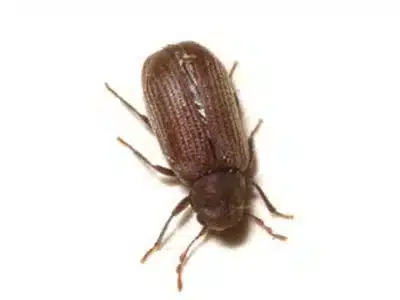
The furniture beetle, also commonly known as the woodworm beetle, is a small insect typically measuring between 2.7 to 4.5 millimetres in length. Their bodies are cylindrical and covered with fine hairs, giving them a somewhat velvety appearance. The colour of these beetles ranges from reddish-brown to dark brown.
Adult furniture beetles have a distinctively rounded pronotum (the plate behind the head), which makes their heads appear hidden when viewed from above. Their antennae are relatively short and consist of 11 segments. The larvae, which are the primary culprits behind the damage, are creamy-white, C-shaped grubs with a distinct head and three pairs of tiny legs. These larvae can grow up to 7 millimetres long.
Habitat
Furniture beetles are most commonly found in wood, where they spend the majority of their lifecycle. They prefer wood that has a moisture content of around 10-30%, which is typical of many timbers used in furniture and building materials. Common infestation sites include wooden furniture, floorboards, structural timbers, and wooden artefacts.
In the UK, furniture beetles are often found in older buildings where wooden structures have been exposed to varying levels of humidity. These beetles are particularly attracted to softwoods and hardwoods that have been previously damaged or are decaying. They are also found in timber with high starch content, which serves as a food source for the larvae.
The presence of exit holes in wood, which are about 1-2 millimetres in diameter and often accompanied by fine wood dust (frass), is a clear indication of a furniture beetle infestation. These exit holes are created by adult beetles as they emerge from the wood after completing their development.
Behaviour
Furniture beetles go through a complete metamorphosis, which includes egg, larval, pupal, and adult stages. The lifecycle begins when the female beetle lays her eggs in the cracks and crevices of wooden surfaces. A single female can lay up to 50 eggs, which hatch into larvae within a few weeks.
The larval stage is the most destructive phase of the furniture beetle’s lifecycle. The larvae tunnel through the wood, feeding on cellulose and other organic materials. This tunnelling can last anywhere from two to five years, depending on environmental conditions such as temperature and humidity. The extensive feeding and tunnelling by the larvae weaken the wood structure, leading to significant damage over time.
After the larval stage, the beetles enter the pupal stage, where they transform into adult beetles. This stage takes place within the wood, and once development is complete, the adult beetles bore exit holes to emerge from the wood. The emergence of adult beetles typically occurs during the warmer months, particularly from late spring to early summer.
Adult furniture beetles do not feed on wood; their primary function is to reproduce and continue the lifecycle. They are relatively short-lived, surviving for only a few weeks after emerging from the wood. During this time, they mate and lay eggs to start the next generation.
Why are Furniture Beetles considered a pest?
Furniture beetles are considered pests primarily because of the significant damage they can cause to wooden structures and furniture. The tunnelling activity of the larvae can weaken wooden beams, floorboards, and other structural components, potentially compromising the integrity of buildings. This can lead to costly repairs and, in severe cases, structural failure.
In addition to structural damage, furniture beetles can ruin valuable furniture and wooden artefacts. Antique furniture, wooden musical instruments, and other heritage items are particularly at risk. The presence of exit holes and frass can detract from the aesthetic and monetary value of these items.
The damage caused by furniture beetles is often not immediately noticeable. Infestations can go undetected for years until the affected wood shows visible signs of weakening or collapse. This makes early detection and intervention crucial in managing these pests.
In the UK, the humid climate and older buildings with substantial wooden elements provide an ideal environment for furniture beetles. Our BPCA-accredited pest controllers frequently deal with furniture beetle infestations, using advanced detection methods and targeted treatments to manage and eliminate these pests.
Signs of Infestation
Detecting a furniture beetle infestation early is key to preventing extensive damage. Here are some common signs to look out for:
- Exit Holes: Small, round holes about 1-2 millimetres in diameter on the surface of wood. These holes are created by adult beetles emerging from the wood.
- Frass: Fine, powdery wood dust found near exit holes. This frass is produced by the larvae as they tunnel through the wood.
- Tunnels: Visible tunnels or galleries within the wood when it is cut open or when surface layers are removed. These tunnels are created by the feeding larvae.
- Weak or Crumbling Wood: Wood that feels weak, spongy, or crumbles easily may be infested. This is due to extensive internal damage caused by the larvae.
- Adult Beetles: Seeing adult beetles around wooden structures or furniture, particularly during the warmer months, can indicate an active infestation.
Impact on Property
The impact of furniture beetle infestations on property can be severe. Structural timbers in homes and buildings can become compromised, leading to safety hazards and costly repairs. Floorboards and wooden beams are particularly vulnerable, and significant infestations can necessitate extensive restoration work.
In addition to structural damage, furniture beetles can devalue antique furniture and wooden artefacts. Collectors and owners of historical items need to be particularly vigilant, as infestations can reduce the value and integrity of these precious items. Conservation efforts can be costly and time-consuming, requiring specialised treatments to eradicate the pests without causing further damage to the artefacts.
Observations in the UK
In the UK, furniture beetle infestations are commonly reported in older buildings with extensive wooden components. The country’s humid climate and the presence of numerous historical structures provide a conducive environment for these pests. Our pest control experts frequently encounter furniture beetles in residential homes, museums, and heritage sites.
Regular inspections and maintenance are crucial in preventing and detecting furniture beetle infestations in these environments. Property owners are encouraged to look for signs of infestation, particularly in wooden beams, floorboards, and furniture. Early intervention can prevent extensive damage and preserve the integrity of valuable wooden structures.
Learn more about how to get rid of furniture beetles
Furniture Beetle
Pest activity
Jan
Feb
Mar
Apr
May
Jun
Jul
Aug
Sep
Oct
Nov
Dec
Risks
Infestation
Public Health
Property Damage
Escalation (left untreated)
Book a FREE Survey
Call us on 0800 808 5615