Dermestes Beetles
(Dermestes spp.)
Appearance
Dermestes beetles, commonly known as larder beetles or hide beetles, are quite easy to identify once you know what to look for. These beetles are typically around 7-9 millimetres in length. Their bodies are oval-shaped and covered in tiny scales, giving them a somewhat textured appearance. Most Dermestes beetles have a distinctive colour pattern: they are generally dark brown or black with a band of lighter coloured hairs across their elytra (the hard wing covers). This band can vary in width and may appear white, yellow, or tan.
The larvae of Dermestes beetles are equally distinctive. They are elongated and covered in bristle-like hairs, with two curved, horn-like projections at the end of their bodies. These larvae can grow up to 15 millimetres long and are often seen crawling in food storage areas or other infested locations.
Habitat
Dermestes beetles are incredibly versatile when it comes to their habitat. They can be found both indoors and outdoors, but they thrive particularly well in places where there is an abundance of organic material. Outdoors, they are commonly found in bird nests, animal burrows, and under the bark of dead trees where they feed on decaying matter.
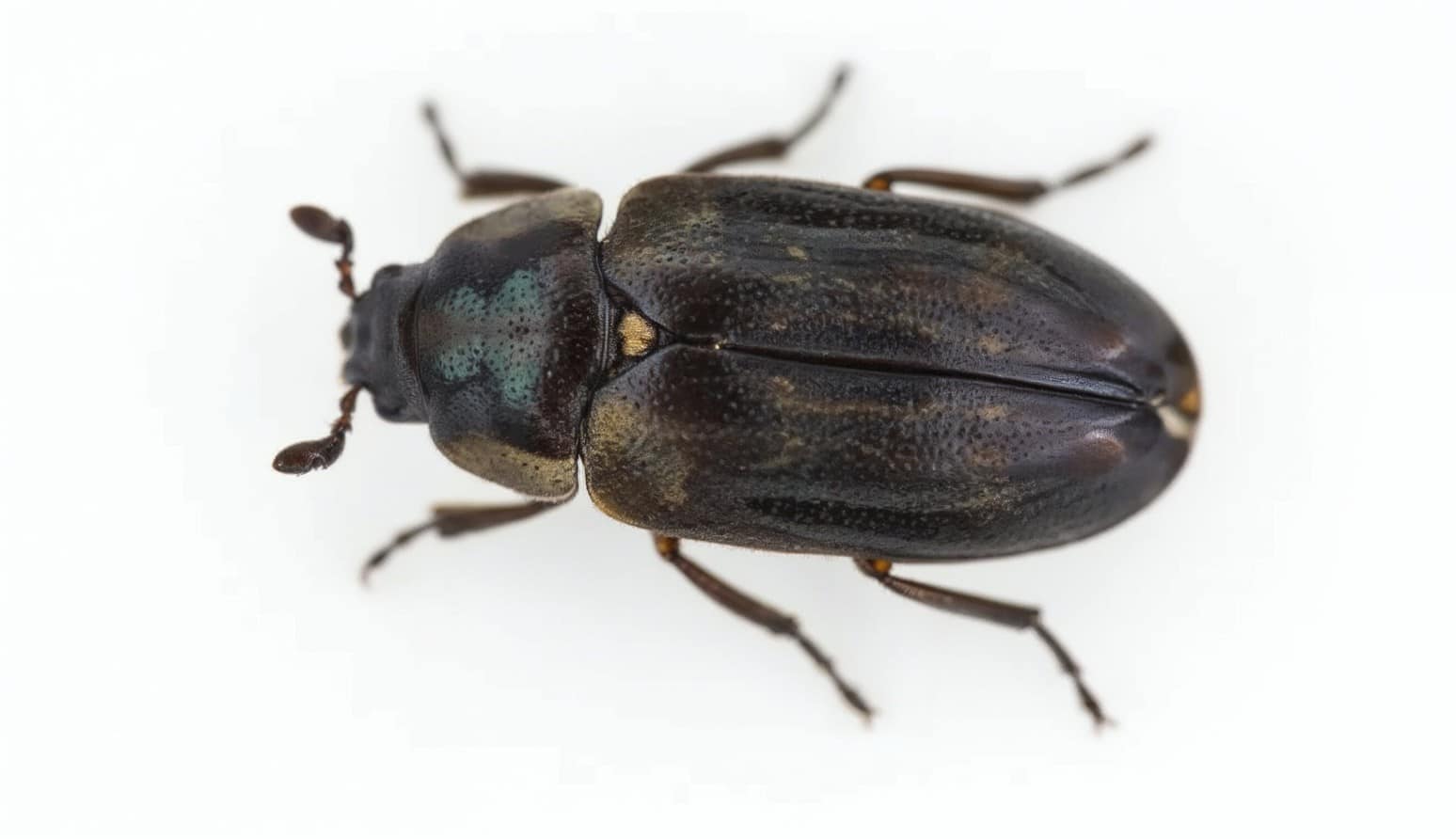
Indoors, these beetles are notorious for infesting food storage areas, especially where dried meats, cheeses, and grains are kept. They are often found in kitchens, pantries, and storage rooms. Museums and taxidermy collections can also fall victim to Dermestes beetles, as they are attracted to dried animal specimens, hides, and furs. In the UK, we often find them in older buildings with poorly managed food storage areas.
Behaviour
Dermestes beetles have a very specific feeding behaviour that makes them quite the pest in certain environments. They are primarily scavengers, feeding on dried animal products and other organic materials. This includes a wide range of substances such as dried meats, cheeses, hides, skins, feathers, and even hair.
The lifecycle of a Dermestes beetle begins when the female lays her eggs in a suitable food source. These eggs hatch into larvae, which then burrow into the food material to feed. The larvae are particularly destructive, as they can tunnel into packaged foods, causing extensive damage. Once they have matured, the larvae will leave the food source to pupate in a sheltered location, such as cracks in walls or floors. After pupation, adult beetles emerge to continue the cycle.
Dermestes beetles are also known for their ability to survive in low-moisture environments. This makes them particularly resilient pests, as they can thrive in dry, undisturbed places where other insects might not. In homes and businesses in the UK, this means they can often go unnoticed until they have caused significant damage.
Why are Dermestes Beetles considered a pest?
Dermestes beetles are considered pests primarily because of the damage they can cause to stored products and organic materials. Their feeding habits can lead to significant economic losses, especially in places where food is stored or processed. They can contaminate food products with their larvae, shed skins, and frass (insect waste), making the food unfit for consumption.
In museums and collections, Dermestes beetles pose a serious threat to valuable specimens. They can cause irreversible damage to taxidermy mounts, dried specimens, and historical artefacts made from organic materials. This not only results in the loss of valuable items but also incurs considerable costs for restoration and pest control measures.
Another reason these beetles are considered pests is their potential impact on health and safety. While they do not pose direct harm to humans, their presence in food can lead to the spread of bacteria and other pathogens. This is particularly concerning in food processing facilities and storage areas, where contamination can lead to foodborne illnesses.
Moreover, Dermestes beetles are known to invade homes and businesses in search of food, causing distress and inconvenience. Their larvae can burrow into various materials, including insulation and even wood, creating additional problems. The adult beetles are also known to fly, which can lead to them spreading more widely throughout a property.
In the UK, our BPCA-accredited pest controllers often deal with Dermestes beetle infestations in both residential and commercial settings. Given their resilience and ability to thrive in various environments, effective control measures are essential to manage and prevent infestations.
Learn more about how to get rid of Dermestes beetles
Dermestes Beetles
Pest activity
Jan
Feb
Mar
Apr
May
Jun
Jul
Aug
Sep
Oct
Nov
Dec
Risks
Infestation
Public Health
Property Damage
Escalation (left untreated)
Book a FREE Survey
Call us on 0800 808 5615