Cat Fleas
(Ctenocephalides felis)
Appearance
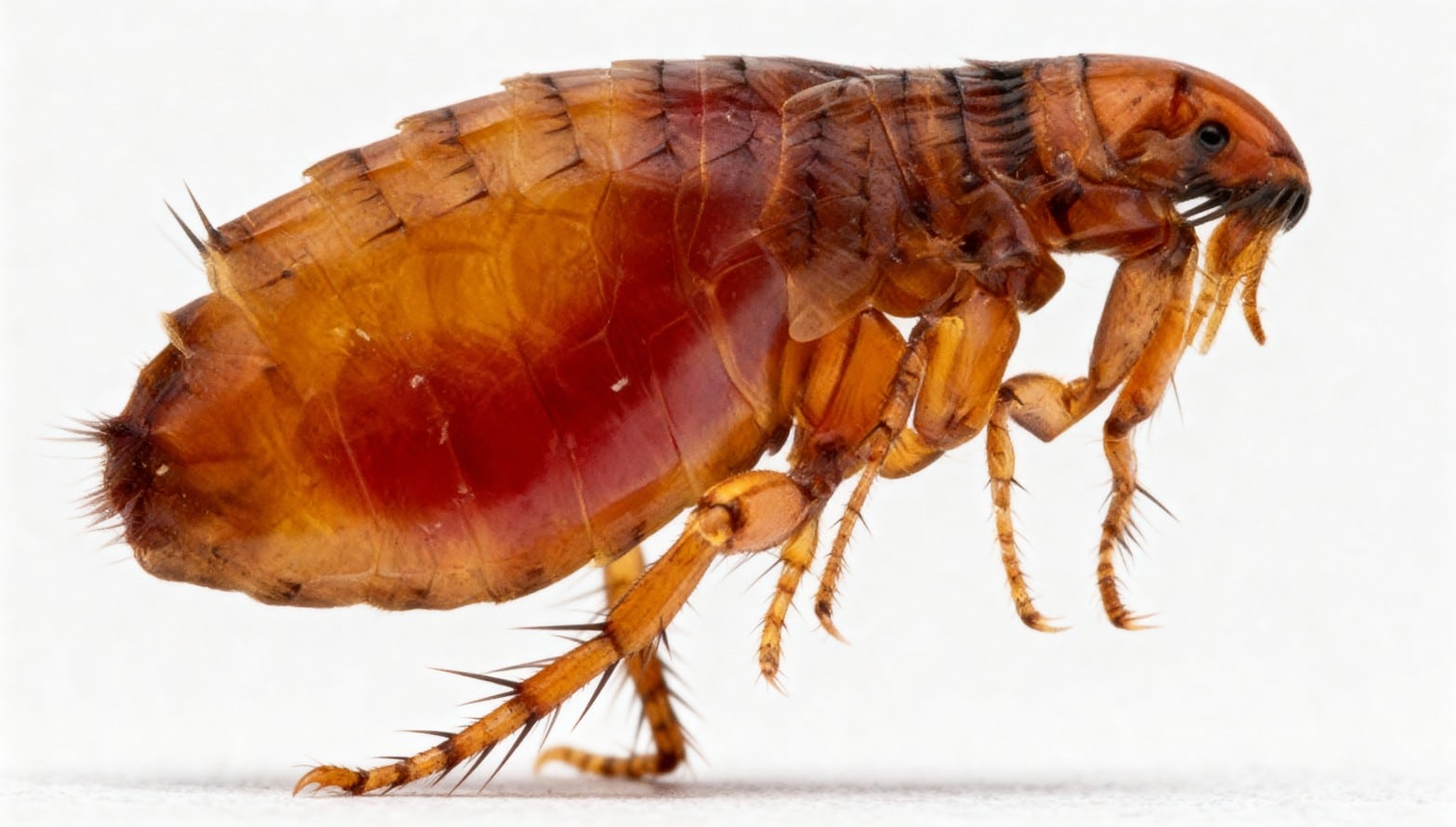
Cat fleas are small, wingless insects with a laterally compressed body, which allows them to move easily through the fur of their host. Adult cat fleas typically measure about 1 to 2 millimetres in length and are dark brown to black in colour. They have long hind legs adapted for jumping, enabling them to leap up to 150 times their own body length. This incredible jumping ability helps them move quickly between hosts and through their environment.
Habitat
Cat fleas are ectoparasites, meaning they live on the outside of their host, feeding on the host’s blood. Their primary hosts are domestic cats, but they can also infest dogs and other mammals, including humans. Cat fleas are highly adaptable and can be found in a variety of environments. They thrive in warm, humid conditions and are commonly found in homes, particularly where pets sleep and rest.
In the home, cat fleas often infest carpets, bedding, and furniture. They prefer areas with high humidity and temperatures between 21°C to 30°C, making homes with central heating ideal environments for their development. Flea larvae develop in the environment, feeding on organic debris and adult flea feces, which contain dried blood.
Behaviour
Cat fleas have a complex life cycle that includes four stages: egg, larva, pupa, and adult. Adult fleas live on their host, feeding on blood. Female fleas can lay up to 50 eggs per day, which fall off the host into the environment. These eggs hatch into larvae within a few days, which then feed on organic debris and adult flea feces. After passing through several larval stages, they spin a cocoon and enter the pupal stage. The pupal stage can last from a few days to several months, depending on environmental conditions. Once conditions are favourable, adult fleas emerge from the pupae and seek a host to feed on.
Cat fleas are known for their biting behaviour, which can cause significant discomfort to their hosts. Flea bites are itchy and can lead to allergic reactions in some animals and humans. Fleas are also capable of transmitting various diseases and parasites, including the tapeworm Dipylidium caninum and the bacteria Bartonella henselae, which causes cat scratch disease.
Cat Fleas in The UK
In the UK, cat fleas are a common problem, especially in homes with pets. The country’s relatively mild climate provides an ideal environment for fleas to thrive. Pet owners in the UK need to be particularly vigilant in monitoring their pets for signs of flea infestations and taking preventative measures to control flea populations.
The presence of cat fleas can be detected through several signs, including:
- Non-stop Scratching: Pets infested with fleas often scratch and groom themselves excessively.
- Hair Loss and Skin Irritation: Flea bites can cause hair loss, red, sore areas on the skin, and in severe cases, flea allergy dermatitis.
- Black Specks in Fur or Bedding: These are flea feces and can be tested by placing them on a damp tissue; if they turn red, it is indicative of digested blood from fleas.
- Flea Dirt: Finding flea dirt (flea feces) on pets or their bedding is a common sign of infestation.
Legal Considerations
Cat fleas are not protected by any specific wildlife conservation laws, and control measures can be freely implemented to manage their populations. However, it is important to use safe and approved methods for flea control to avoid harming pets and other non-target animals. Consulting with a veterinarian for appropriate flea treatments is recommended to ensure effective and safe control.
Health Risks
Cat fleas pose several health risks to both pets and humans. They can cause severe itching and allergic reactions, known as flea allergy dermatitis. In severe infestations, pets can suffer from anaemia due to blood loss. Cat fleas can also transmit several diseases and parasites, including:
- Tapeworms: Pets and humans can contract tapeworms by ingesting infected fleas.
- Cat Scratch Disease: Caused by Bartonella henselae, this disease can be transmitted to humans through flea bites or contact with flea-infested cats.
- Flea-Borne Typhus: Though rare, fleas can transmit typhus bacteria to humans.
Maintaining good hygiene and regular veterinary check-ups for pets are crucial for mitigating these health risks.
Management and Control
Effective management of cat fleas involves a combination of treating the pets and their environment. Here are some recommended methods:
- Regular Grooming and Inspection: Regularly groom pets with a flea comb to remove fleas and check for signs of infestation.
- Veterinary Treatments: Use vet-recommended flea treatments, such as topical treatments, oral medications, or flea collars, to kill adult fleas on pets. Always follow the vet’s advice, especially regarding dosages and suitable products for different pets.
- Environmental Control: Thoroughly vacuum carpets, furniture, and pet bedding to remove flea eggs, larvae, and pupae. Dispose of the vacuum bag or empty the canister immediately after use to prevent fleas from escaping. Wash pet bedding and other fabrics in hot water.
- Flea Sprays and Foggers: Use insecticidal sprays or foggers specifically designed to kill fleas in the environment. These products can help eliminate fleas at various life stages.
- Preventative Measures: Maintain regular flea prevention treatments for pets, especially during warmer months when flea activity peaks.
Cat Fleas
Pest activity
Jan
Feb
Mar
Apr
May
Jun
Jul
Aug
Sep
Oct
Nov
Dec
Risks
Infestation
Public Health
Property Damage
Escalation (left untreated)
Book a FREE Survey
Call us on 0800 808 5615