Black Rat
(Rattus rattus)
Appearance
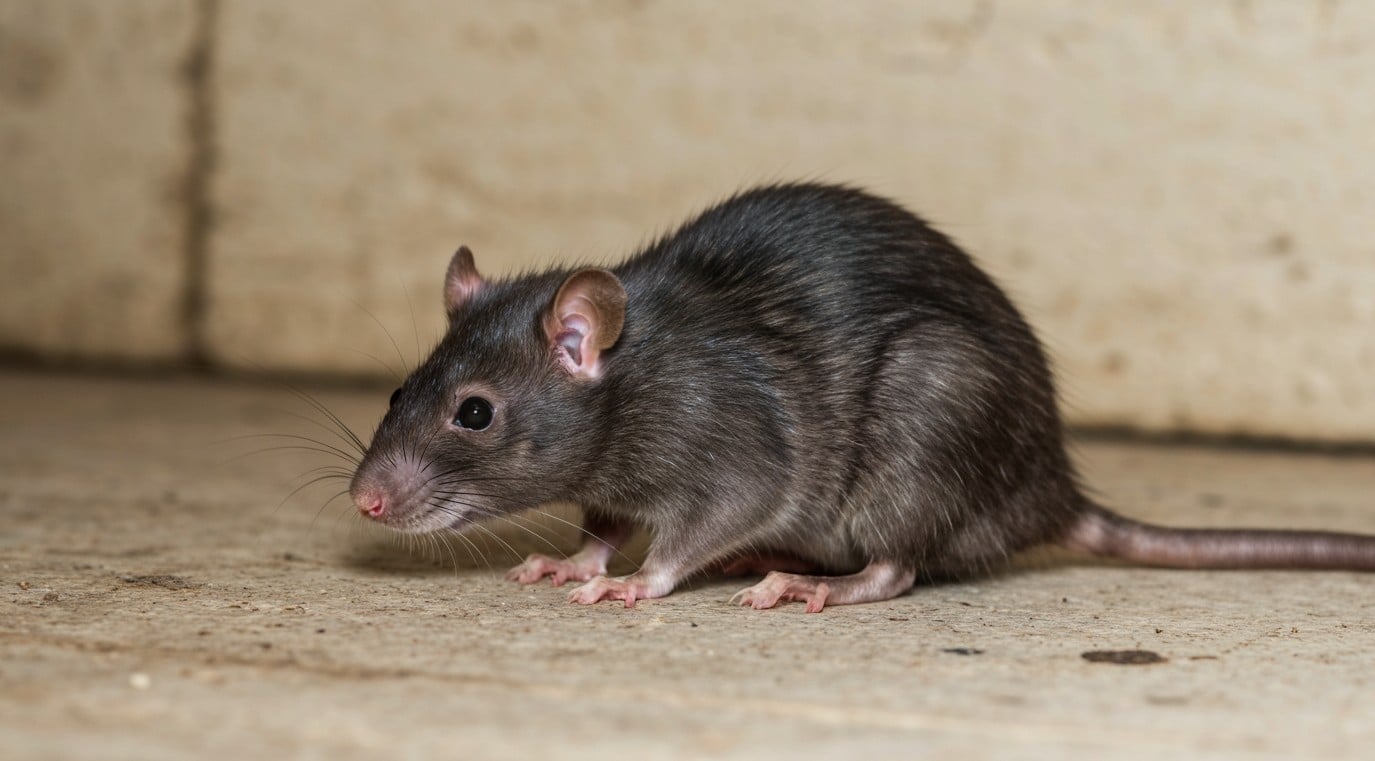
The black rat, also known as the roof rat or ship rat, is a smaller, sleeker cousin of the brown rat. Adult black rats typically measure between 16 to 24 centimetres in length, with a tail that is longer than their body, adding an additional 19 to 25 centimetres. They generally weigh between 150 and 250 grams. Their fur is usually dark brown to black, with a lighter underside. Black rats have a pointed nose, large ears, and a sleek body, which distinguishes them from the more robust brown rat. Their large ears and slender build help them excel in climbing and navigating tight spaces.
Habitat
Black rats are highly adaptable and can thrive in a variety of environments. They are particularly associated with warmer climates and are commonly found in coastal areas, ports, and urban settings. In the UK, their presence is primarily limited to certain regions, such as port cities and coastal areas, where they can find suitable nesting sites and food sources.

In urban environments like The UK, black rats are typically found in elevated areas such as roofs, attics, and trees. They are excellent climbers and often build their nests in high places, away from ground-level predators. Their nests are typically made from shredded materials such as paper, leaves, and cloth, and are often found in wall cavities, roof spaces, and other secluded spots. Unlike brown rats, which prefer burrows, black rats favour lofts and upper parts of buildings.
Behaviour
Black rats are nocturnal and very agile, making them adept at navigating through buildings and accessing food sources. They are omnivorous but have a preference for grains, fruits, and nuts. In urban areas, they often scavenge for food in rubbish bins, pantries, and storerooms. Black rats are also known to gnaw on various materials, including electrical wiring, which can pose a fire hazard.
These rats are social animals and tend to live in colonies. Their breeding season can occur throughout the year in favourable conditions, with females producing several litters per year. Each litter typically contains 5 to 10 young, which are weaned after about three weeks. This rapid reproduction can lead to significant population growth if not controlled. Black rats are known for their cautious behaviour and keen senses, which help them avoid traps and predators.
Black Rats in The UK
In the UK, black rats are less common than brown rats but can still be found in certain areas, particularly around ports and older buildings with suitable nesting sites. Their presence can lead to several issues, including:
- Structural Damage: Black rats are notorious for gnawing on various materials, including wood, plastic, and electrical wiring. This behaviour can cause significant damage to buildings and increase the risk of electrical fires.
- Contamination: Black rats can contaminate food stores with their droppings and urine, posing health risks to humans. They are known carriers of diseases such as leptospirosis, salmonellosis, and plague, which can be transmitted through direct contact or consumption of contaminated food.
- Noise and Nuisance: The presence of black rats in attics and wall cavities can be detected by the scratching and scurrying noises they make at night. This can be particularly disturbing in residential areas.
Legal Considerations
Black rats are not protected by specific wildlife conservation laws in the UK, and control measures can be implemented as needed to manage their populations. However, it is important to use humane methods for trapping and to follow guidelines for the safe and legal use of rodenticides. Using rodenticides should be done with caution to prevent accidental poisoning of non-target animals and pets. It is advisable to work with BPCA-accredited pest controllers who can provide effective and humane solutions tailored to the specific challenges posed by black rats.
Health Risks
Black rats can pose significant health risks to humans. They are known carriers of various diseases, including:
- Leptospirosis: This bacterial infection can cause flu-like symptoms and, in severe cases, can lead to liver and kidney damage.
- Salmonellosis: This infection causes gastrointestinal illness, with symptoms such as diarrhoea, fever, and abdominal cramps.
- Plague: Historically, black rats were vectors for the plague, though modern outbreaks are extremely rare.
- Rat-Bite Fever: This is a bacterial disease that can be transmitted through a bite or scratch from an infected rat, or by handling a dead rat.
- Hantavirus: Although more common in other parts of the world, hantavirus can cause severe respiratory illness.
Maintaining good hygiene practices is crucial for mitigating these health risks. This includes cleaning areas where rats have been active, using disinfectants to clean surfaces contaminated by rat droppings and urine, and addressing infestations promptly to prevent the spread of disease and protect the health of residents.
Signs of Infestation
Identifying a black rat infestation involves looking for specific signs that indicate their presence. Here are some common indicators:
- Droppings: Black rat droppings are spindle-shaped and about 1.2 cm long. These are often found near food sources, nesting sites, and along their runways.
- Gnaw Marks: Black rats will gnaw on wood, plastic, and other materials to keep their teeth sharp. Look for gnaw marks on baseboards, door frames, and food packaging.
- Nests: Their nests are often found in high places, such as attics, lofts, and roof spaces. Nests are made from shredded paper, fabric, and other soft materials.
- Tracks and Runways: In dusty areas, you might see their footprints and tail marks. They also create runways along walls and other surfaces, which can appear as dark, greasy smudges from their fur.
- Scratching Noises: Black rats are nocturnal, so you might hear scratching or scurrying sounds in the walls, attic, or ceiling at night.
Management and Control
Managing and controlling black rat populations requires a combination of strategies tailored to their behaviour and habitats. Here are some effective methods:
- Exclusion: Preventing black rats from entering buildings is crucial. This involves sealing any gaps or holes in foundations, walls, roofs, and doors. Using fine mesh or metal screens can help cover larger openings such as vents and windows.
- Sanitation: Reducing the availability of food and water can help deter black rats. This includes keeping kitchens and food storage areas clean, storing food in sealed containers, and promptly cleaning up spills and crumbs.
- Trapping: Live traps and snap traps can be effective for controlling small populations of black rats. Traps should be placed in areas where rats are active, such as along walls and near nesting sites. Baiting traps with attractive food items like peanut butter or fruits can increase their effectiveness.
- Rodenticides: In cases of severe infestations, rodenticides may be necessary. However, their use should be carefully managed to prevent accidental poisoning of non-target animals and pets. It is recommended to use rodenticides in tamper-resistant bait stations and to follow all safety guidelines.
- Professional Pest Control: For larger infestations, professional pest control services are essential. BPCA-accredited pest controllers can provide comprehensive solutions, including inspection, exclusion, trapping, and safe use of rodenticides.
Ecological Considerations
While black rats are considered pests, it is important to remember that they also play a role in the ecosystem. They serve as prey for various predators, including birds of prey, snakes, and larger mammals. Effective management should aim to control populations without causing undue harm to the broader ecosystem.
In summary, black rats are a significant pest in urban environments due to their potential to cause structural damage, contaminate food sources, and transmit diseases. Effective management involves a combination of exclusion, sanitation, trapping, and, when necessary, professional pest control services. By understanding their behaviour and implementing appropriate control measures, it is possible to manage black rat populations and mitigate the risks they pose.
Read more about how to get rid of rats.
Black Rat
Pest activity
Jan
Feb
Mar
Apr
May
Jun
Jul
Aug
Sep
Oct
Nov
Dec
Risks
Infestation
Public Health
Property Damage
Escalation (left untreated)
Book a FREE Survey
Call us on 0800 808 5615