Black Ants
(Lasius niger)
Appearance
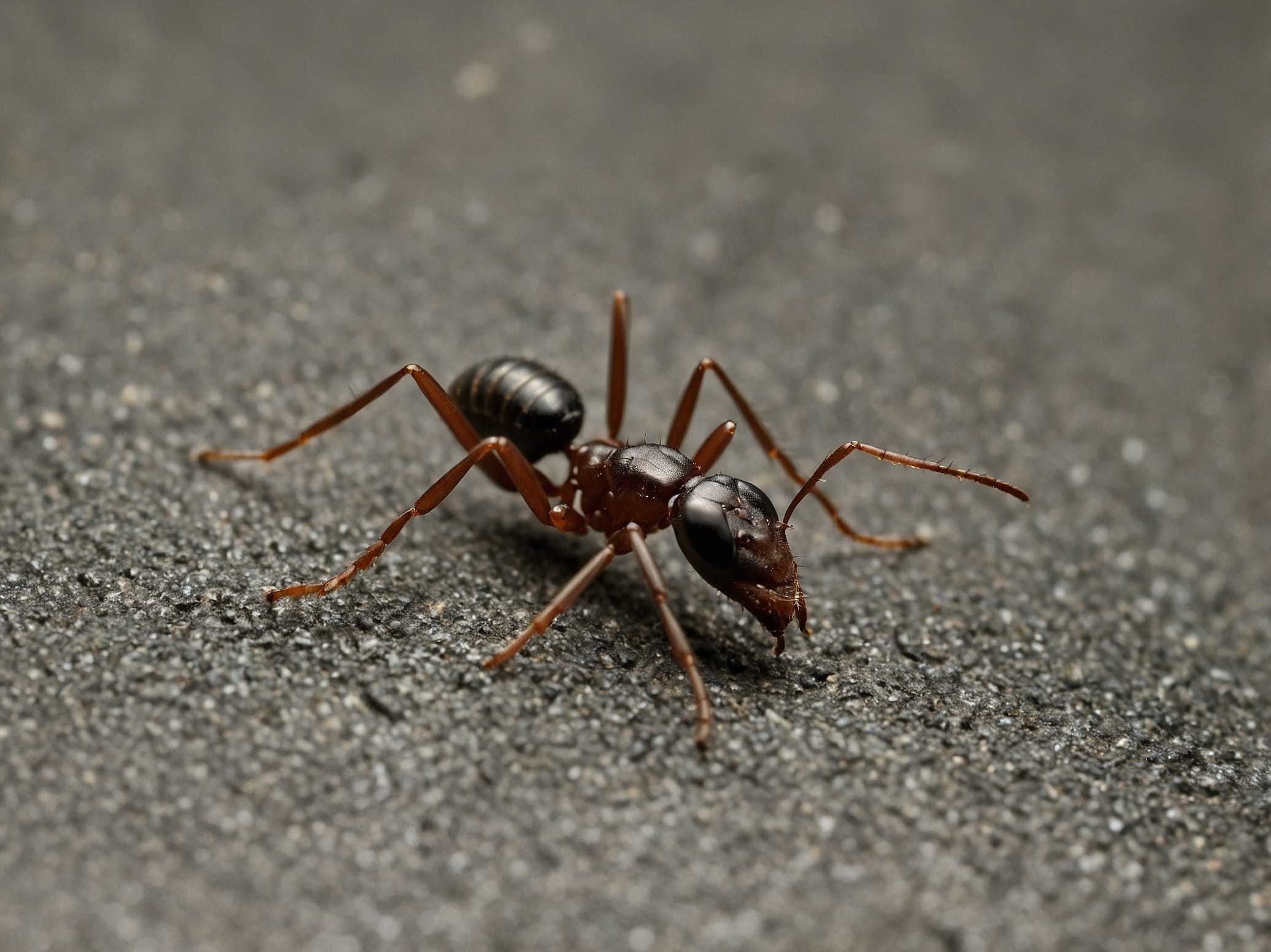
Black ants, scientifically known as Lasius niger, are one of the most common ant species found in urban environments. These ants are relatively small, with workers measuring between 3 to 5 millimetres in length. The queen, however, is significantly larger, ranging from 15 to 20 millimetres. As their name suggests, black ants are predominantly dark brown to black in colour.
Their bodies are divided into three main sections: the head, thorax, and abdomen. Black ants have elbowed antennae, which are used for sensing their environment and communicating with other ants. Their legs are relatively long in proportion to their bodies, allowing them to move quickly and efficiently.
Habitat
Black ants are highly adaptable and can be found in a variety of habitats. They typically nest outdoors in soil, creating small mounds or craters on the ground’s surface. These nests can often be found in gardens, lawns, under pavements, and along building foundations. Black ants prefer dry, well-drained soil and will often locate their nests in sunny areas.
Indoors, black ants are commonly found in kitchens and areas where food is stored. They enter buildings in search of food and water, often travelling long distances from their nests to forage. In urban environments like The UK, black ants can be a common sight during the warmer months, especially in homes, restaurants, and food processing facilities.
Behaviour
Black ants are social insects that live in colonies. A typical colony consists of a queen, who is responsible for laying eggs, and numerous worker ants, which are sterile females. The workers perform various tasks, including foraging for food, caring for the young, and defending the nest. Males are also present in the colony, but their sole purpose is to mate with the queen.
Foraging behaviour in black ants is highly organised. Workers form long trails to food sources, guided by pheromones left by other ants. These pheromone trails help other workers locate food and efficiently bring it back to the nest. Black ants are omnivorous and will feed on a variety of substances, including sweets, proteins, fats, and even other insects.
Reproduction in black ants involves a fascinating process known as nuptial flights. During the warmer months, usually from June to September, winged males and queens leave the nest in large swarms to mate. After mating, the males die, and the fertilised queens land to start new colonies. The queen sheds her wings and begins laying eggs, which hatch into larvae and eventually develop into workers.
Why are Black Ants considered a pest?
Black ants are considered pests primarily due to their tendency to invade homes and buildings in search of food. Their foraging behaviour can lead them into kitchens, pantries, and food storage areas, where they can contaminate food products. Although they do not pose direct health risks to humans, their presence in large numbers can be distressing and inconvenient.
In addition to being a nuisance indoors, black ants can also cause problems in gardens and lawns. Their nesting behaviour can disrupt soil structure, leading to uneven ground and damage to plant roots. This can affect the health and appearance of lawns and garden beds.
Black ants are also known to protect and farm aphids, which are harmful to plants. The ants feed on the honeydew produced by aphids and, in return, protect the aphids from predators. This mutualistic relationship can lead to increased aphid populations and further damage to plants.
In The UK, black ants are commonly reported during the warmer months when their foraging activity increases. Our BPCA-accredited pest controllers frequently deal with black ant infestations in both residential and commercial properties, using effective methods to manage and eliminate these pests.
Signs of Infestation
Detecting a black ant infestation is relatively straightforward due to their foraging behaviour and the visible trails they create. Here are some common signs to look out for:
- Sightings: Regular sightings of black ants, especially in kitchens, pantries, and other areas where food is stored. These ants are most active during the warmer months.
- Trails: Long, organised trails of ants moving to and from food sources. These trails are often visible along walls, floors, and countertops.
- Nests: Small mounds or craters of soil on lawns, gardens, and along building foundations. Disturbed soil or small holes can indicate the presence of a nest.
- Aphid Activity: Increased aphid activity on plants, especially if accompanied by ants. This can indicate that black ants are farming aphids for honeydew.
- Food Contamination: Finding ants in food containers, cabinets, or pantry areas. Contaminated food products should be discarded to prevent health risks.
Impact on Property
While black ants do not cause significant structural damage, their presence can be a nuisance and lead to food contamination. In gardens and lawns, their nesting behaviour can disrupt soil structure and affect plant health. Additionally, their relationship with aphids can exacerbate plant damage, particularly in agricultural and horticultural settings.
In commercial properties, such as restaurants and food processing facilities, black ants can be a major concern. Their presence can lead to food contamination, loss of business, and damage to reputation. Effective pest management is crucial to maintain hygiene standards and prevent infestations.
Black Ants in the UK
In the UK, black ant infestations are commonly reported during the warmer months, from late spring to early autumn. The country’s urban environment, with its numerous food sources and sheltered nesting sites, provides ideal conditions for black ants to thrive. Our pest control experts frequently encounter black ant infestations in residential homes, commercial properties, and public spaces.
Effective management of black ants in the UK involves regular inspections, proper sanitation, and targeted treatments. Addressing underlying issues such as food availability and entry points can help prevent infestations and maintain a healthy indoor environment.
Black Ants
Pest activity
Jan
Feb
Mar
Apr
May
Jun
Jul
Aug
Sep
Oct
Nov
Dec
Risks
Infestation
Public Health
Property Damage
Escalation (left untreated)
Book a FREE Survey
Call us on 0800 808 5615