Bees
(Anthophila spp.)
Appearance
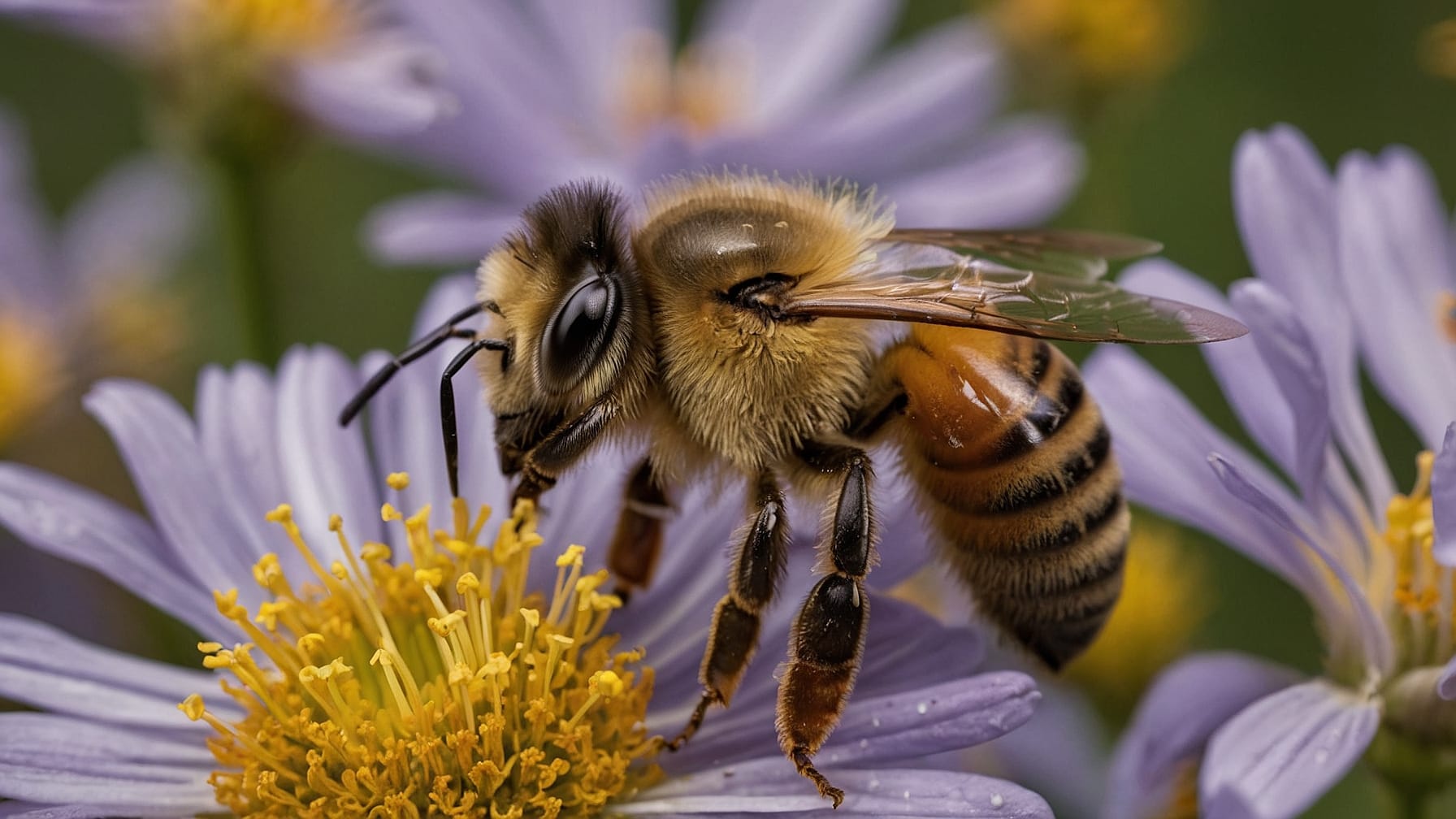
Bees are highly diverse insects, with over 20,000 known species varying widely in size, colour, and behaviour. However, they generally share some common characteristics. Most bees have a robust body covered with branched hairs, which help them collect pollen. Their bodies are divided into three parts: the head, thorax, and abdomen. They also have two pairs of wings, although some species have shorter wings than others.
The most commonly recognised bees are honeybees and bumblebees. Honeybees are about 12-15 millimetres in length, with a golden-brown colour and dark bands across their abdomen. Bumblebees are larger, ranging from 15 to 25 millimetres, and have a more rounded, fuzzy appearance with distinctive black and yellow stripes.
Bees have compound eyes, which provide them with a wide field of vision, and three simple eyes (ocelli) on top of their head. Their antennae are segmented and play a crucial role in sensing their environment. The legs of bees are also adapted for pollen collection, with special structures known as pollen baskets (corbiculae) on their hind legs.
Habitat
Bees are found in almost every habitat where flowering plants exist. They are most commonly associated with gardens, meadows, forests, and agricultural areas where they play a crucial role in pollination. Different species of bees have specific habitat preferences:
- Honeybees: These bees are often kept in artificial hives managed by beekeepers. Wild honeybee colonies typically nest in hollow trees, rock crevices, or other sheltered areas. They prefer locations that offer protection from the elements and are close to abundant food sources.
- Bumblebees: Bumblebees usually nest in the ground, often in abandoned rodent burrows, under piles of debris, or in thick grass. Some species also nest above ground in cavities within walls or trees. Bumblebees prefer habitats with diverse flowering plants, providing a continuous food supply throughout the growing season.
- Solitary Bees: Unlike social bees, solitary bees do not form large colonies. They nest individually in various locations, such as soil, wood, or hollow stems. Examples include leafcutter bees, which use leaves to line their nests, and mason bees, which use mud to construct their nests.
Behaviour
Bees are primarily known for their role in pollination, a vital ecological service that supports the reproduction of many flowering plants. Their foraging behaviour involves collecting nectar and pollen from flowers. Nectar provides energy, while pollen is a protein source essential for the development of their young.
Honeybees exhibit highly organised social behaviour. A typical honeybee colony consists of a single queen, thousands of worker bees, and a few hundred drones (male bees). The queen’s primary role is to lay eggs, while worker bees perform various tasks such as foraging, nursing the young, defending the hive, and maintaining hive cleanliness. Drones’ sole purpose is to mate with a queen from another hive.
Communication within a honeybee colony is sophisticated. Bees use pheromones to convey information about hive status and perform the famous “waggle dance” to communicate the location of food sources to other foragers.
Bumblebees also live in social colonies, but these are usually smaller than honeybee colonies, often comprising just a few hundred individuals. The queen bumblebee starts a new colony each spring, laying eggs that develop into workers. Towards the end of the season, new queens and males are produced, which leave the nest to mate. The new queens hibernate through the winter, while the old colony dies off.
Solitary bees, as their name suggests, do not form colonies. Each female bee creates her own nest, where she lays eggs and provides food for the developing larvae. Despite their solitary nature, many solitary bees nest in close proximity to others of the same species.
Importance and Conservation
Bees are among the most important pollinators, playing a crucial role in the reproduction of many crops and wild plants. They contribute significantly to biodiversity and the stability of ecosystems. About one-third of the food we consume relies on pollination by bees and other insects.
The decline in bee populations globally is a cause for concern. Factors contributing to this decline include habitat loss, pesticide use, climate change, disease, and the spread of invasive species. Conservation efforts are critical to support bee populations and ensure the continued availability of their pollination services.
Beekeepers play a vital role in the conservation of honeybees. They manage hives to produce honey and other products like beeswax, propolis, and royal jelly, while also ensuring the health and sustainability of bee populations. Urban beekeeping has become increasingly popular, contributing to local food production and biodiversity.
Bees in the UK
In the UK, bees are a familiar sight in gardens, parks, and natural reserves. The country’s green spaces provide crucial habitats for various bee species, supporting urban biodiversity. Community gardens and initiatives to plant bee-friendly flowers have been successful in creating environments where bees can thrive.
Local beekeepers in the UK manage numerous hives across the country, producing honey and promoting awareness about the importance of bees. These efforts help to support healthy bee populations and contribute to the overall health of the local ecosystem.
Public education campaigns have been effective in The UK, encouraging residents to plant bee-friendly flowers, avoid using harmful pesticides, and provide habitats for solitary bees, such as bee hotels. These small changes in gardening practices can have significant positive impacts on bee populations.
What to Do If You Encounter Bees
If you encounter a swarm of bees or have bees nesting in an inconvenient location, it is important to handle the situation with care. Bees are generally not aggressive unless provoked, but disturbing a nest can lead to defensive behaviour.
The best course of action is to contact a local beekeeper or a professional bee removal service. Beekeepers have the expertise to safely relocate bee colonies without harming them. They can also provide advice on how to make your property less attractive to nesting bees in the future.
It is important to note that bees are protected in many areas due to their ecological importance. In the UK, removing or destroying a bee nest without proper authorisation is discouraged. Instead, focus on conservation-friendly solutions that ensure the safety and health of both humans and bees.
Conclusion
Bees are vital to our ecosystems and agriculture, providing essential pollination services that support a wide variety of plant species. While they are not considered pests, encountering bees in urban environments requires careful management to protect both the bees and human residents.
By understanding their behaviour, habitat preferences, and the importance of their conservation, we can coexist with these incredible insects and support their crucial role in maintaining biodiversity and food security.
For more information on how to support bee conservation efforts and handle bee encounters responsibly, please reach out to local beekeeping associations or environmental organisations.
Bees
Pest activity
Jan
Feb
Mar
Apr
May
Jun
Jul
Aug
Sep
Oct
Nov
Dec
Risks
Infestation
Public Health
Property Damage
Escalation (left untreated)
Book a FREE Survey
Call us on 0800 808 5615