
How to Get Rid of Squirrels
Heard a scratching or scuttling noise coming from inside your loft or walls? You may be hearing the noise of a squirrel infestation and need to act quickly to avoid property damage and further distress.
Squirrels may look cute and fluffy, but when these pests invade your property, they cause havoc and are just as distressing to live with as other rodents such as rats and mice.
Calling a professional pest control company such as Clark Pest Control is the most effective method to deal with your squirrel problem, however, there are some DIY methods you can try first if you wish.
This step-by-step guide will tell you all you need to know about these furry pests and take you through the best ways to prevent squirrels from taking over your home.
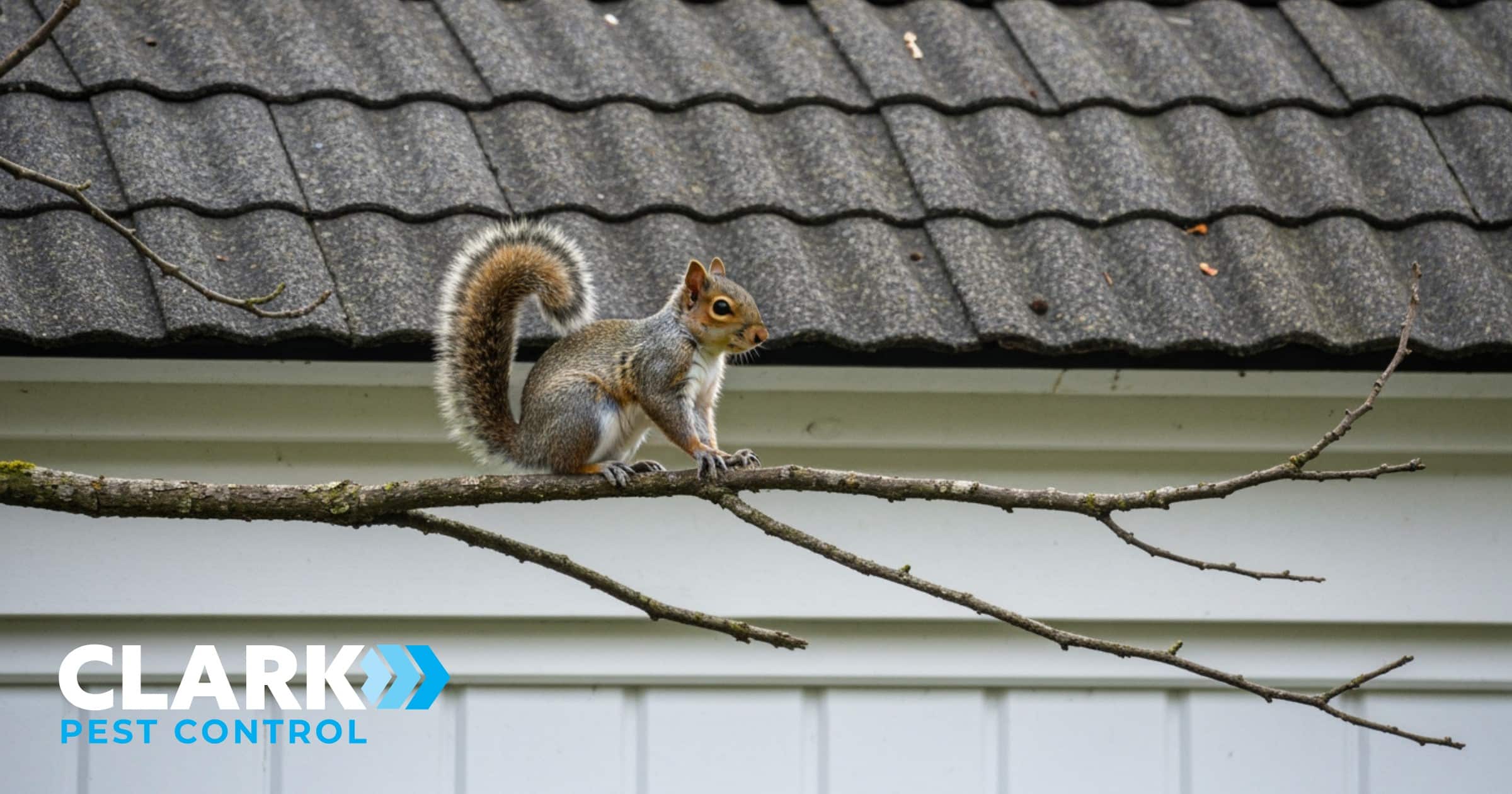
Squirrel Types
Globally there are well over 200 different species of squirrel ranging widely in characteristics from the exotic flying squirrel to the common grey squirrel seen frequently in the UK.
In the UK there are currently four types of squirrels that can be classed as wild animals but only two are commonly sighted:
The black squirrel and the brunette squirrel are both extremely rare to see in this country, although there are some suggestions that the black squirrel could one day overrun grey squirrels as the main pest squirrel.
Red Squirrels (Sciurus vulgaris)
The red squirrel is the only existing species of squirrel that is native to the UK and has lived in the country for thousands of years.
Red squirrels are NOT considered as pests and are actually one of the most hihgly protected endangered species in the UK, with their habitat threatened by the invasvie grey.
The number of red squirrels in the UK has dropped alarmingly in recent decades and this species can now only be found in certain secluded regions such as the highlands of Scotland, Northern Wales, and small pockets of rural England.
Appearance
A red squirrel’s body is around 20 cm in length with a bushy tail which is almost as long. Slightly smaller than grey squirrels, these rodents weigh around 300g.
Red squirrel coats range in colour from scarlet to nearly black with a white underbelly. In the UK their coats tend to be much redder than in other countries making them unmistakable from other rodents.
During the summer they will shed their coats twice so will be much fluffier during the winter months.
In the past 200 years, the population of red squirrels has dramatically declined due to the introduction of the grey squirrel, which now well outnumber their red cousins, and there are now only around 140,000 left in the UK.
Behaviour
Red squirrels are found in wooded areas where they spend their time scavenging for seeds, nuts, and berries from the surrounding trees and bushes.
They are shy and solitary creatures who refuse to share their food with others.
The grey squirrel invasion has forced red squirrels to vacate vast areas of the UK and they are now almost exclusively found in Scotland, and some very limited places in Wales and Northern England.
Red squirrels are critically endangered and are protected under the Wildlife and Conservation Act 1981 so you should never attempt to trap or kill one.
Grey Squirrels
If you are looking for pest control solutions to deal with squirrels, then this is the species you will be tackling.
Introduced into the UK from America in the 1870s this rodent quickly overtook the red squirrel as the largest squirrel species in the country. Grey Squirrels did this not only by reproducing at a very fast rate but also by spreading a disease known as the squirrel pox virus (SQPV).
Whilst SQPV has no harmful effects on grey squirrels it is disastrous for red squirrels, and it takes just one initial case for an entire local population to die out.
Appearance
Grey squirrels weigh much more than red squirrels at around 500g. Their body/heads have a total length of around 25cm with a tail the same length. They have sharp claws and four long front teeth, for constant gnawing, that never stop growing.
These squirrels have almost exclusively grey fur although some may have a slightly brown tinge.
Behaviour
Grey squirrels are far less timid than red squirrels and are commonly found in parks, in trees in heavily populated urban areas.
They will feed on nuts and seeds, as with red squirrels but when these are not available, they will raid bird feeders, take bird eggs directly from their nests, and even scavenge through gardens for flowers, berries, and tomatoes.
Grey squirrels will sometimes actually set up a nest inside a man build structure, due to easy access to food and shelter, and people often have problems with squirrels in their attics and crawl spaces.
Why are Squirrels Pests?
The grey squirrel is recognised by the International Union for Conservation of Nature (IUCN) as one of the top 100 worst invasive pests in the world.
Grey squirrels carry diseases that are deadly to the native red squirrel and can also cause significant health issues to humans with their droppings often containing salmonella, amongst other dangerous bacteria.
They also cause significant property damage and pose a threat to UK forests, stripping bark from historical trees and costing the British forestry industry £40m every year.
The European Squirrel Initiative has warned that without steps taken to control tree squirrels, common tree species such as oak and beech may come under serious risk of extinction.
Due to these negative effects, you should be aware that it is actually illegal to release a trapped grey squirrel back into the wild, and they must be humanely destroyed instead, as they are subject to efforts to restrict population growth.
How to identify squirrels
Before you can develop your plan to get rid of grey squirrels on your property you need to be sure that they are indeed the pests that you are dealing with.

Obviously, if you keep seeing bushy tails disappearing into a hole into your roof or gutter that is a bit of a giveaway, but many people will need to look out for more subtle signs of squirrel activity.
These are a few common giveaways that you are dealing with a grey squirrel infestation:
1) Scratching Noise
People often hear squirrels before they see them. If you hear scratching and scurrying sounds coming from your attic or chimney there is a good chance they are being made by grey squirrels.
As rodents, squirrels are constantly looking for something to chew on and your house’s beams and electrical wiring can look like a tasty snack.
For this reason, you should also listen out for a chewing or gnawing sound from inside wall cavities and from above.
2) Visual Evidence
Given that squirrels prefer to hide themselves away in crawl spaces and attics it can be hard to see visual evidence of these invasive pests inside your home.
Nevertheless, there are a few signs you should keep an eye out for inside your property.
These include:
- Teeth marks – Squirrels will chew on anything, especially wooden beams, walls, and electrical wiring.
- Physical nests – A sure sign of squirrels, these pests will sometimes set up their nest inside areas of your home where people rarely go such as in loft insulation, garages, and sheds. A squirrel nest is normally around 20-25cm in diameter, circular, and build from twigs and, leaves, and bark.
- Air Vent damage– If you find that your air vents have been damaged or broken, there is a chance that you are seeing one of the entry points your feathered friends used to access your roof space.
- Loose chippings – Squirrel damage to property can be quite extensive, and they do not tend to clean up after themselves. If you see wood shavings or chips scattered across the floor of your loft there is a good chance they were left there by gray squirrels.
It is often easier to spot signs of squirrel activity on the exterior of your property due to their tendency to occupy hard to reach places when inside.
Some of the signs you should keep an eye out for when outside your property include:
- Bird Feeder Damage – Bird seed is a particularly popular source of food for the grey squirrel. Feeder damage is therefore common in domestic gardens where there is a squirrel problem.
- Mounds on Lawn – Small divots on your lawn can be a sign that squirrels have been burying their nuts in your garden.
- Nests in trees – Much more easily spotted than indoor nests. Look out for nests in the tree branches near your home.
- Bark removed – Keep an eye out of bark being stripped of nearby trees particularly any young saplings.
- Physical sightings – Grey squirrels are not particularly sneaky and if you have a large population living on or near your property and if you have a glance into nearby trees often enough you will see these pests without much difficulty.
How to get rid of squirrels
Before you head to your local garden centre for a trolley full of squirrel traps or call in a pest control specialist there are some natural methods you can try to repel squirrels from your property.
Remove food sources
Grey squirrels have settled close to humans in part due to easy access to food.
The first step you should take to prevent squirrels from seeing your property as an ideal nesting site is to eliminate as many food sources as possible.
Unfortunately, squirrels are partial to bird food so you may need to remove any bird feeders from your garden for the time being.
Unfortunately, as grey squirrels can feed on a range of natural things from acorns and berries to small birds it is almost impossible to remove all food sources and you will likely have to combine this step with some other prevention methods to be effective in controlling squirrels.
Decoy Predator
Squirrels hate the sight of their natural predators so one way to control grey squirrels is to buy a fake owl or similar.
Placing a model predator in your garden can be an effective way to scare squirrels away although you will need to move the decoy regularly or the squirrels will quickly grow used to it and realise it poses no real danger.
Trim tree branches
The most serious squirrel infestation issues come when the pests gain access to your home so limiting their ease of access to your property is essential to DIY squirrel control.
Overhanging tree branches act as a bridge between your garden and your roof and given their extreme jumping ability, branches as much as 8 feet away from your property offer easy access for squirrels.
Cutting back branches where possible is a great way of making it that little bit harder for squirrels to reach your roof line.
It is worth noting that if they are separated from their baby squirrels, adults can become extremely aggressive, so if you cut off their access routes to an established nest inside your loft, they can cause extensive property damage trying to gain access.
If you think you have a squirrel nest inside your property, DIY methods are very unlikely to be able to deal with the issue and it is time to call a professional pest control company such as Clark Pest Control.
Natural squirrel repellent
There are several DIY squirrel repellents you try to repel these furry pests.
Squirrels dislike odours from coffee grounds and peppermint, and you can try combining fresh plant mint with vinegar to create a repellent spray.
There are also a number of squirrel repellent sprays you can purchase that use natural ingredients and you may also have some success using these as a form of squirrel control.
Motion activated sprinklers
If squirrels are often running about on your lawn, then a motion activated sprinkler may help.
The sensor on the sprinkler will detect when an animal enters its vicinity and spray water in its direction.
As well as working to deter squirrels, these sprinklers can be activated by other animals including pets so remember to turn it off when letting your dog out.
Squirrel Traps
There are a range of traps you can buy to try and get rid of squirrels.
Just some of the traps available include:
- Live cage traps – Designed to catch live animals these traps lure in squirrels using bait such as nuts or peanut butter before closing behind them. If you use a live trap you need to be completely sure you can dispose of the squirrels caught using humane methods which do not fall foul of welfare laws.
- Snap Traps – Also known as spring traps, these work in the same way as traditional mouse traps or rat traps but on a slightly bigger scale.
- Tube Traps – By exploiting squirrels’ inquisitive nature, these traps lure the pests into a small tube before triggering behind them and activating the killing mechanism.
If you purchase DIY traps you need to be aware of the legislation around trapping as illegal squirrel trap use and inhumane disposal of squirrels can cause you to get in a lot of trouble.
FAQs – All About Squirrels
What species of squirrel live in the UK?
The United Kingdom is home to two main species of squirrel, which are the red squirrel and the grey squirrel. The red squirrel is a species that is native to the UK. Whereas the grey squirrels are a non-native species first introduced to the UK, in the 1800s, from North America.
Why are red squirrels endangered in the UK?
Experts estimate that the population of red squirrels in the UK has dropped sharply from 3.5 million to between 120,000 – 160,000. The sharp decline in the population of red squirrels in the UK is attributed to the introduction of the non-native grey squirrel species to the United Kingdom.
How to get rid of squirrels?
Common ways to get rid of squirrels is by removing access to food sources, trimming tree branches to limit access to your home and by using natural spray repellents with a strong smell with ingredients like coffee grounds, peppermint and vinegar.
Contact a Professional
Trapping can only be done most effectively by a pest control professional and if you have a serious squirrel problem, and do not wish to spend time and money trying to deal with the issue, it is strongly recommended that you use professional help.
At Clark Pest Control, our technicians are trained to use the squirrels’ behaviour against them in order to achieve a quick result not only allowing peace of mind for our customers but ensuring no distress to the animal.
To talk to one of our personnel about arranging a free survey, or to book in some pest control service, give us a call now on 0800 808 5615.
Alternatively, complete our contact form, and one of our sales representatives will be in touch as soon as possible.
Why Choose Clark Pest Control?
- 24/7 Same Day Response
- Local Branches Across the UK
- State of the Art Equipment
- Fully Insured Pest Control Service
- British Pest Control Association (BPCA)
- Accredited Pest Technicians
- Cost-Effective.
Book a FREE Survey
Call us on 0800 808 5615