
How to Get Rid of Rats in the Loft – Best Ways to Remove Rats in the Attic
Rats are not just scary to have around, they also bring health and property risks. They can damage insulation, chew through electrical wires (which can cause fires), and spread diseases like leptospirosis and hantavirus.
For this reason, it is essential to get rid of the rats in your lost as soon as possible, and calling a local professional pest controller is always the best way to get rid of any rodent problem once and for all.
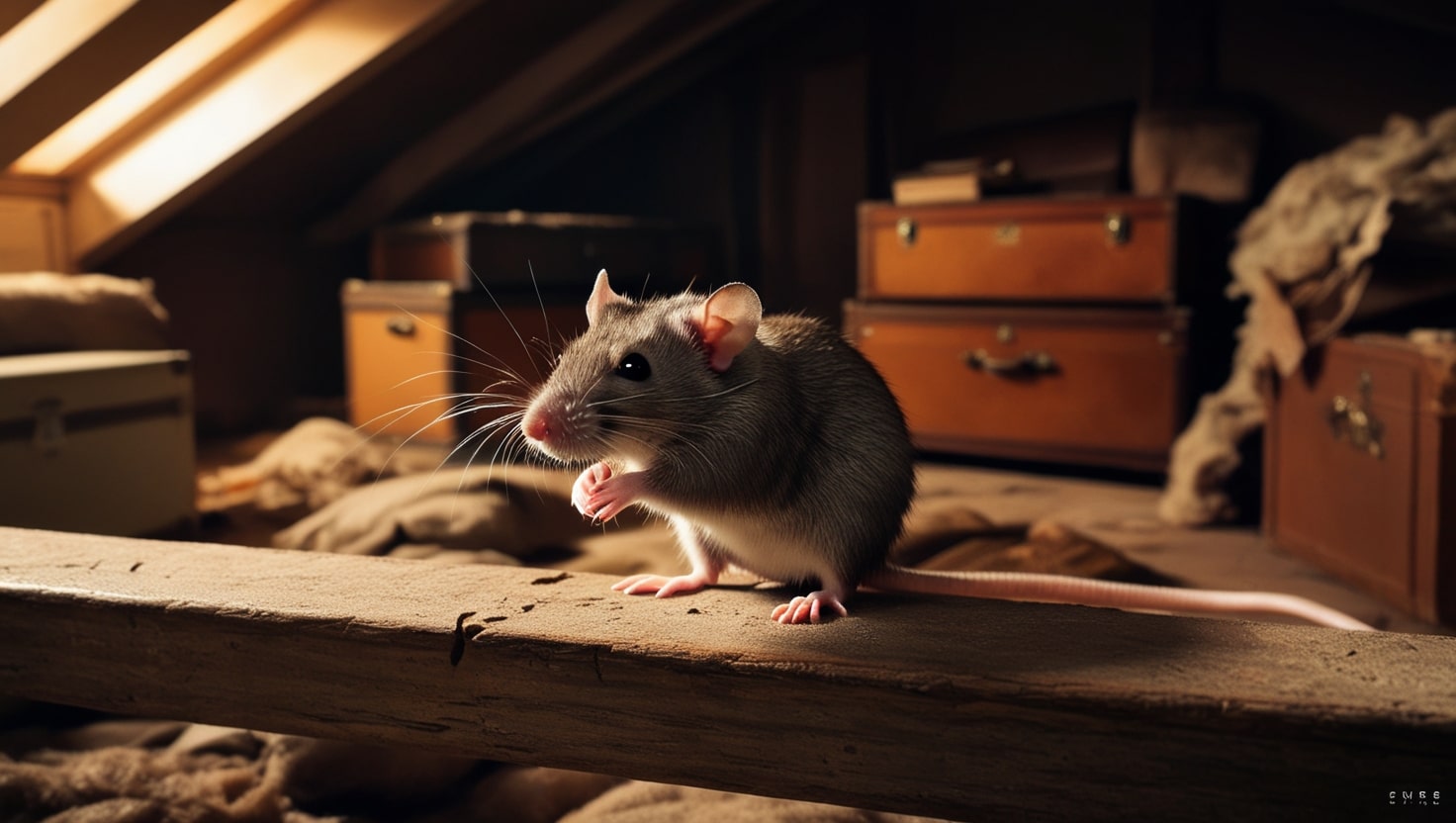
Signs of Rats in the Loft or Attic
Before you can get rid of rats in the loft or attic, you need to know they’re there. Some common signs of rats in the attic include:
- Noises at Night: Rats are active at night. If you hear scratching, scurrying, or gnawing sounds coming from your loft or attic, especially at night, it could be a sign of rats.
- Droppings: Rat droppings are dark brown and can be found near food, along pathways, or where they nest.
- Gnaw Marks: Rats need to gnaw to keep their teeth short. Look for chew marks on wood, plastic, or even wires in your loft.
- Urine Smell: Rat infestations often come with a musty urine smell, especially in small areas like lofts or attics.
- Nests and Chewed Materials: Rats use materials like insulation, cardboard, and paper to make nests. If you see these things shredded, it could be a sign of rats.
How Do Rats Get Into Your Loft or Attic?
Knowing how rats get into your loft or attic can help you to keep rats at bay in the future once the existing rats in your attic have been removed by a professional pest controller like the Pest Control Glasgow experts at Clark Pest Control.
In Scotland, rodents often make their way into lofts by climbing up outside walls, using overhanging branches, or even climbing drainpipes. Rats can squeeze through very small gaps around your home and it can be difficult to find our how rats are getting in without professional assistance.
That said, here are some common ways that rats can enter a property:
- Roof Gaps: Missing tiles or holes in the eaves are easy ways for rats to get in.
- Ventilation Openings: Gaps around vents or poorly sealed openings can become entry points for rats, mice and squirrels.
- Pipes and Drains: Rats are great climbers and can use drainpipes to get into your home.
- Cavity Walls: Some older Scottish homes have gaps in cavity walls that make it easy for rats to move around the building.
If you want to keep rats away once and for all, it’s important to get a full survey of your property to determine how rats may be able to gain access and put a plan in place to seal off any vulnerabilities.
The Dangers of Having Rats in Your Loft or Attic
Rats in your loft or attic can be extremely dangerous. Rats carry diseases like leptospirosis, salmonella, and hantavirus, posing a genuine health threat to people and pets so having rats inside your home is not something you want to be dealing with for very long. Rat droppings and urine can contaminate food, water, and surfaces, making people sick.
Rats and mice also cause extensive property damage. Their constant chewing can ruin insulation, damage wooden structures, and even cause fires if they chew through electrical wires. In homes in Scotland, where lofts are often used for storage, rats can also damage personal belongings.
How to Get Rid of Rats in the Loft or Attic: A Step-by-Step Guide
If you think you have rats in your loft or attic, it’s important to act quickly. Here’s a step-by-step guide to help you get rid of them:
Step 1: Block All Entry Points to Stop Rats from Getting In
The first step to getting rid of rats living in your loft is to make sure they can’t come back in. Inspect the outside of your home for gaps, holes, or other possible entry points. Pay extra attention to roof tiles, soffits, and vents. Use strong materials like steel wool, wire mesh, or sealant to block these entry points because rats are very good at chewing through weaker materials like plastic or foam.
Step 2: Remove Food and Water Sources to Get Rid of Rats
Rats are attracted to food, water and warmth and will purposely make their nests in close proximity to these essentials. Make sure your loft is free of food and store any food items in sealed containers. Rats also like pet food, bird seed, and compost, so keep these stored securely. Fix any leaks to remove water sources that could attract rats.
Step 3: Set Up Traps to Get Rid of Rats
Traps can be a good way to deal with roof rats in the loft or attic but only if you know what you are doing. There are many different types of rat traps available, like snap traps, live traps, and electronic traps. Snap traps are usually the most effective, especially when baited with foods like peanut butter which rats find highly addictive. Place traps along walls because rats like to follow edges rather than move through open spaces. Always use traps safely, remove dead rats promptly and wear gloves to avoid leaving your scent on the traps.
Step 4: Clean and Remove Nesting Materials from the Loft or Attic
Rats build nests using whatever they can find, like insulation or cardboard. Cleaning up these materials makes your loft less attractive to rats. Wear gloves and a mask while cleaning because rat droppings and nesting materials can carry harmful germs.
Step 5: Call Professionals to Get Rid of Rats for Good
Rat related pest infestations should always be dealt with by a professional pest control service. Our trained rat control experts can find entry points throughout your home, remove the rats safely, and give you advice on how to prevent rats from entering your loft space in the future. We have vast experience dealing with Scottish homes and know the best ways to control rats here.
How to Prevent Rats from Getting Into Your Loft or Attic in the Future
Once you’ve gotten rid of rats in the loft, keeping them out is the next challenge. Here are some tips to help keep your loft rat-free:
Regular Inspections
Check your loft and outside of your home regularly for new gaps or damage that rats could use to get in.
Tree Maintenance
Keep tree branches trimmed away from your roof. Rats can enter your loft by climbing branches to get to your attic.
Seal Gaps and Cracks
Inspect and seal any gaps around vents, pipes, and roof eaves regularly.
Secure Rubbish Bins
Make sure all outdoor bins are tightly sealed since rats are often attracted to easy food sources.
Avoid Bird Feeders Near the House
Bird feeders can attract rats. If you use them, keep them far away from your house.
Why Choose Clark Pest Control to Remove Rats from Your Loft or Attic?
Clark Pest Control has lots of experience dealing with rat infestations across Scotland. Our professional pest control Glasgow team is trained to spot signs of rats and use the best methods to remove and prevent them. We are a BPCA-accredited pest control company, which means we use safe and effective methods to eliminate mouse and rat problems safely and effectively and are highly knowledgeable on everything from Glasgow rat statistics to rodenticide applications.
We know that every home is different, so we create solutions that fit your needs. From inspections and removal to keeping your loft safe in the future, we offer a complete service to give you peace of mind. Don’t let rats take over your attic—contact Clark Pest Control for quick, reliable, and local pest control help.
Frequently Asked Questions About Getting Rid of Rats in the Loft or Attic
Q: How do I know if I have rats in my loft? A: Common signs include scratching noises, droppings, chew marks, and nesting materials. You might also notice a musty smell.
Q: What attracts rats to lofts in Scotland? A: Rats are often attracted by warmth, food, and easy entry points. Cold Scottish winters can also drive rats indoors for shelter.
Q: Can I get rid of rats without professional help? A: While traps and other DIY methods can work for small problems, bigger infestations are best handled by professionals to make sure the rats are completely gone and don’t come back.
Q: How long does it take to get rid of rats? A: It depends on how bad the infestation is and the methods used. A professional treatment can usually get rid of the problem in a few weeks.
Q: Are your rat removal methods safe for pets and children? A: Yes, Clark Pest Control uses safe and humane ways to remove rats. We also give advice to keep pets and children safe during the treatment.
Why Choose Clark Pest Control?
- 24/7 Same Day Response
- Local Branches Across the UK
- State of the Art Equipment
- Fully Insured Pest Control Service
- British Pest Control Association (BPCA)
- Accredited Pest Technicians
- Cost-Effective.
Book a FREE Survey
Call us on 0800 808 5615